
OUR STONES
LAPIS LAZULI
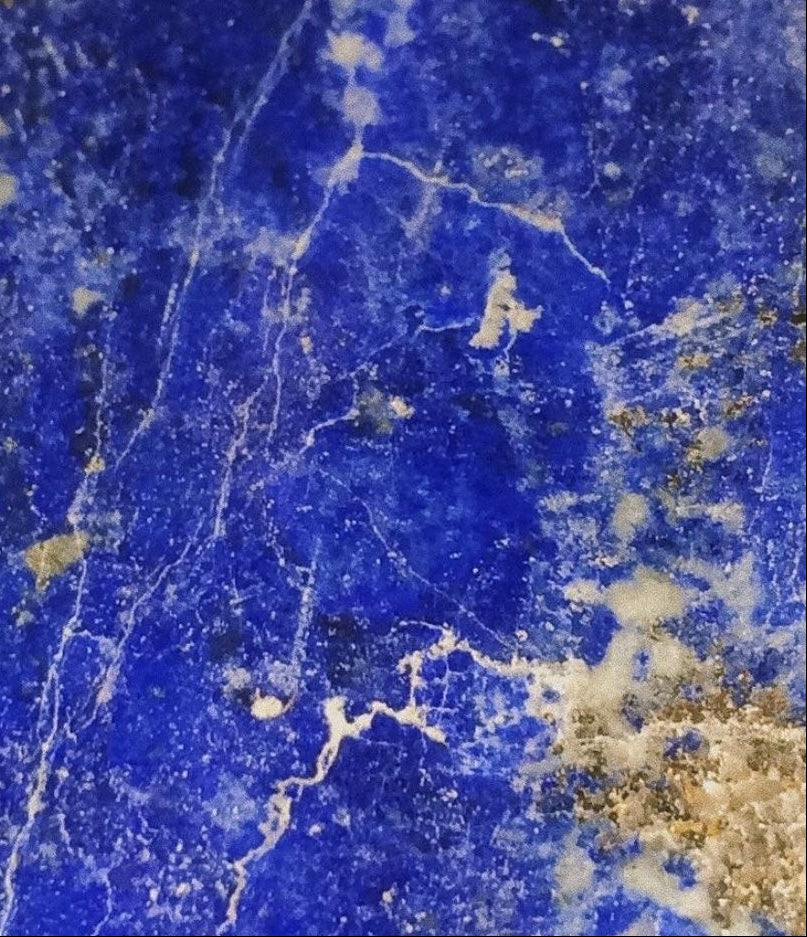
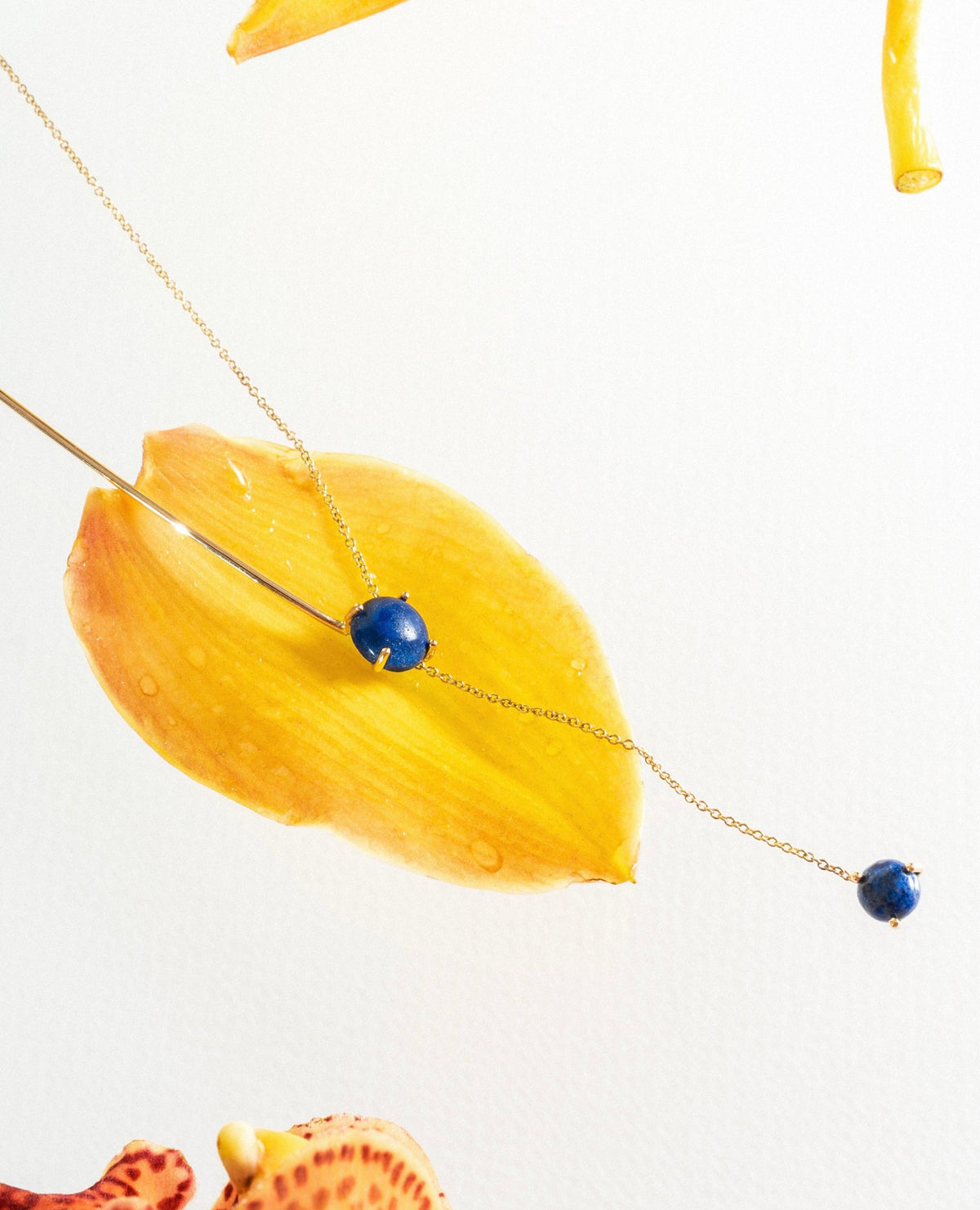
Lapis Lazuli is valued for its beautiful blue color, it often has pyrite inclusions that makes it resemble a starry night sky. Unlike transparent gemstones, lapis lazuli is a rock, it contains several minerals such as lazurite, calcite and pyrite. The more lazurite grains it has, the darker the blue color.
It can be found in many shades of blue, from violet tones to greenish, and it is the combination of minerals that gives the color. The most prized is a bright royal blue tone with no visible calcite, meaning it doesn’t have any white streaks.
Humans have been using lapis lazuli for more than 6 500 years. The civilizations of Egypt, Mesopotamia, Greece, Rome and China valued the gemstone for its vivid color. The world’s oldest known commercial source of Lapis lazuli was Bactria, which today is Pakistan. Those same mines are still producing today. Lapis Lazuli is usually found in very remote and inhospitable locations, such as high mountains bare of any vegetation, which makes its extraction difficult.
During the Renaissance, it was also ground into pigment to create ultramarine, a precious blue shade used in painting. Throughout history, the gem was a symbol of wisdom and spirituality, often associated with royalty and as valued as other blue stones like sapphire.
Lapis lazuli is a semi translucent to opaque stone. Its hardness depends on the mix of minerals it has, normally it ranges from 5 to 6 on the Mohs scale. It is produced in many places, with the main sources being Chile, Siberia, Russia and specially Afghanistan.
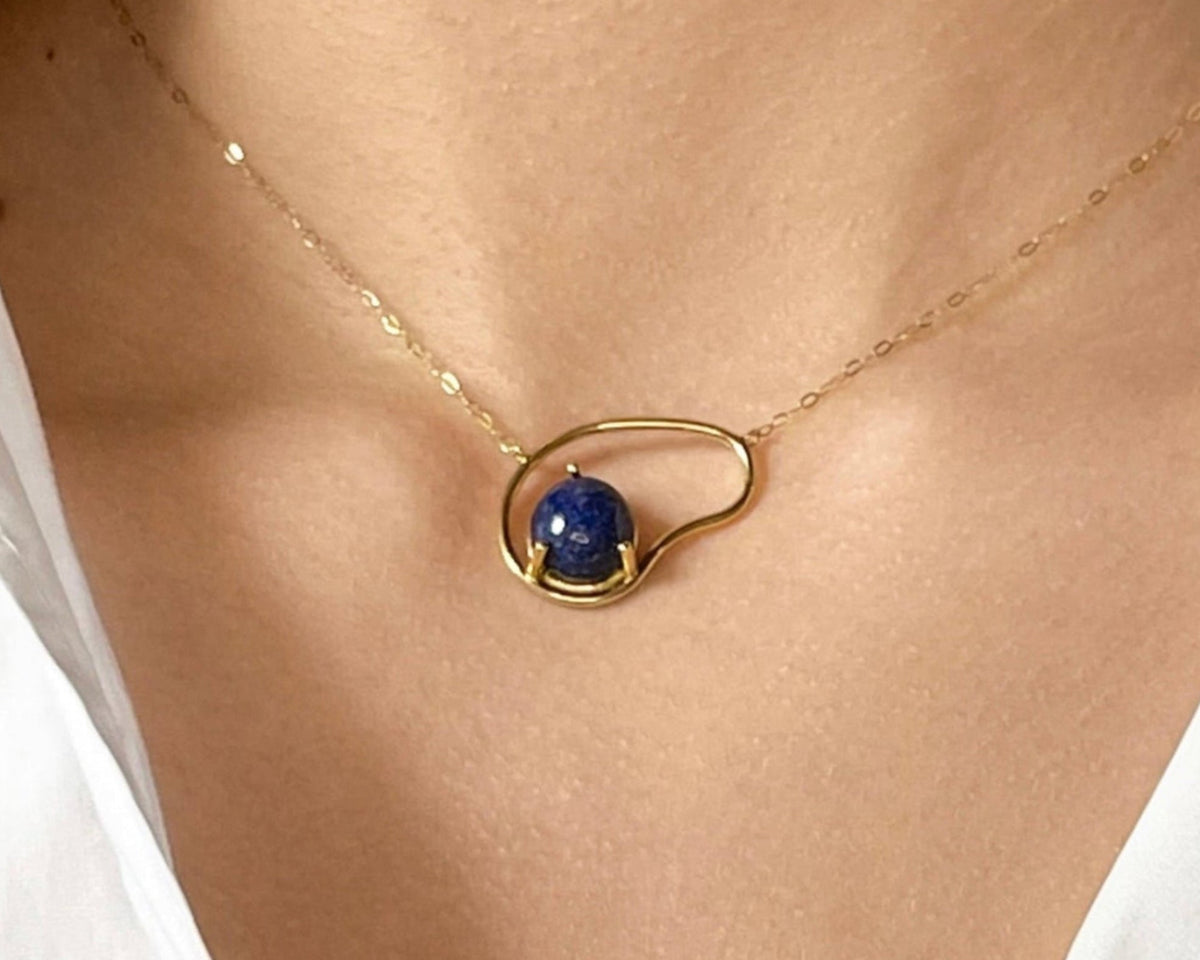
Its deep blue color and natural gold pattern makes lapis lazuli an original and beautiful stone that has been celebrated for thousands of years. Although throughout history the gem has also been used as a carving material to make sculptures and as a pigment used in paintings, having it as a piece of jewelry remains a timeless choice.

MADE IN ANTWERP
Our jewelry is entirely made in Antwerp, Belgium, by a team of experienced goldsmiths and artisans.
CERTIFICATE
All pieces will be carefully wrapped by our team, and sold with a certificate of authenticity.
FREE SHIPPING AND RETURNS
We offer worldwide secured delivery and returns, with no minimum purchase. Taxes and customs fees are included.
3 YEARS WARRANTY
A three-year guarantee is included with all Nayestones orders.