
OUR STONES
MOONSTONE
Moonstones have a delicate and mystical beauty. The soft glow that resembles the moonlight is due to the phenomenon of adularescence, caused by the stone scattering the light in many directions. This optical effect gives a glow that appears to float just below the surface of the stone and that shifts with movement.
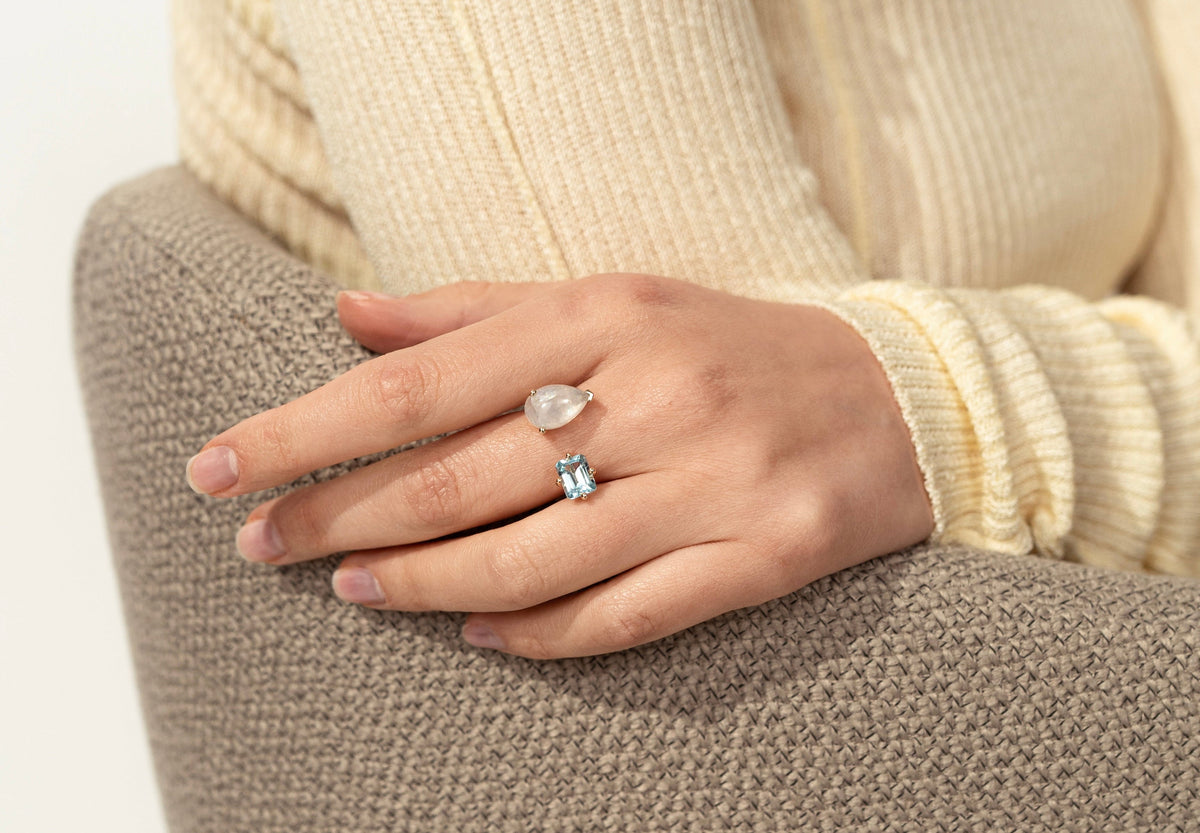
Moonstone is part of the Feldspar group, which is the most widespread and diverse group of minerals of our planet, making up more than half of Earth’s crust. It is composed of thin layers of the feldspar minerals orthoclase and albite, which are responsible for the stone’s ability to scatter the light and produce its characteristic glow.
It has been appreciated for centuries for its symbolism, of course being almost always associated with the moon. In Hindu mythology it was believed that moonstones were solidified moon beans. In some cultures, like Ancient Rome and the Middle East, it was believed the stone gave good luck and harmony. During the Art Nouveau period moonstone became very popular for its romantic appeal. Many designers such as René Lalique and Louis Comfort Tiffany started to use this stone in jewelry.
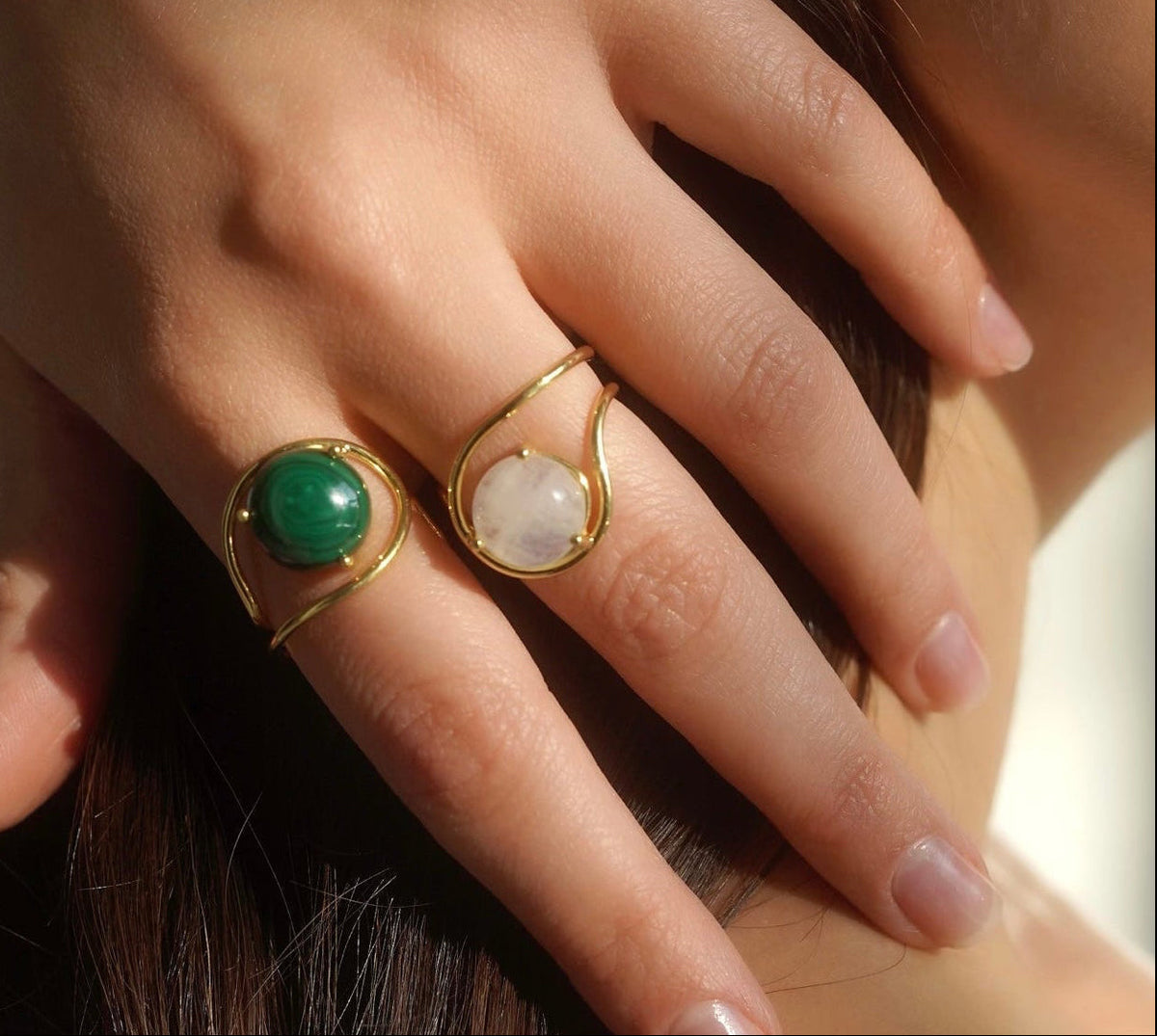
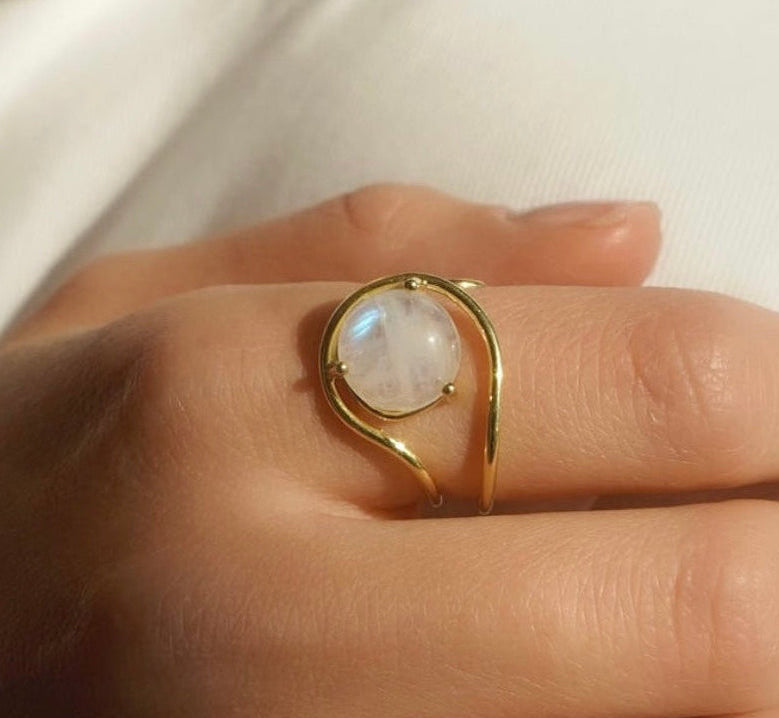
Moonstone has a hardness of 6 to 6,5 on the Mohs scale and it can be found in many regions around the world. The best quality moonstones have a clear bodycolor with a blue glow, and they can be found specially in Sri Lanka and India. Other sources are Madagascar, Myanmar, Brazil, Australia and The USA.
Often described as ethereal and romantic, moonstones are typically colorless, white or cream. As many other opaque gemstones, they are cut in cabochons to show their glow. It is definitely a beautiful and very symbolic gemstone. After all, who wouldn’t want a piece of jewelry with a gem that resembles the moon.

MADE IN ANTWERP
Our jewelry is entirely made in Antwerp, Belgium, by a team of experienced goldsmiths and artisans.
CERTIFICATE
All pieces will be carefully wrapped by our team, and sold with a certificate of authenticity.
FREE SHIPPING AND RETURNS
We offer worldwide secured delivery and returns, with no minimum purchase. Taxes and customs fees are included.
3 YEARS WARRANTY
A three-year guarantee is included with all Nayestones orders.